Redefining Urban Intelligence
A Smart City integrates technology, data, and innovation to create sustainable, efficient, and livable urban environments. It's about using digital solutions to enhance quality of life, optimize resource usage, and create more responsive governance.
Smart City Introduction
Understanding the concept and implementation of smart cities
Definition of Smart City
A Smart City is an urban area that leverages digital technologies, data analytics, and interconnected systems to improve the quality of life for residents, optimize city operations, and promote sustainable development. It integrates information and communication technologies (ICT), Internet of Things (IoT), big data, and artificial intelligence (AI) to enhance urban infrastructure, including transportation networks, water and energy management, waste disposal, and public safety.
Smart cities also provide more interactive and responsive governance, allowing citizens to report issues, access services digitally, and participate in urban planning, while making public spaces safer and more inclusive (European Commission, 2023; IBM, 2023).
Smart cities leverage technology to improve the overall standard of living. Examples include Singapore's Smart Nation initiative, Barcelona's smart lighting and waste management systems, and Jakarta's "Jakarta Kini (JAKI)" platform, which enhances citizen engagement and public service delivery. Smart cities not only support sustainable urban growth but also encourage economic innovation, better resource management, and adaptive solutions for challenges such as traffic congestion, pollution, and an aging population (TechTarget, 2023; Plant Moran, 2018; Cisco, 2023).
Technology Integration
IoT & Data Analytics
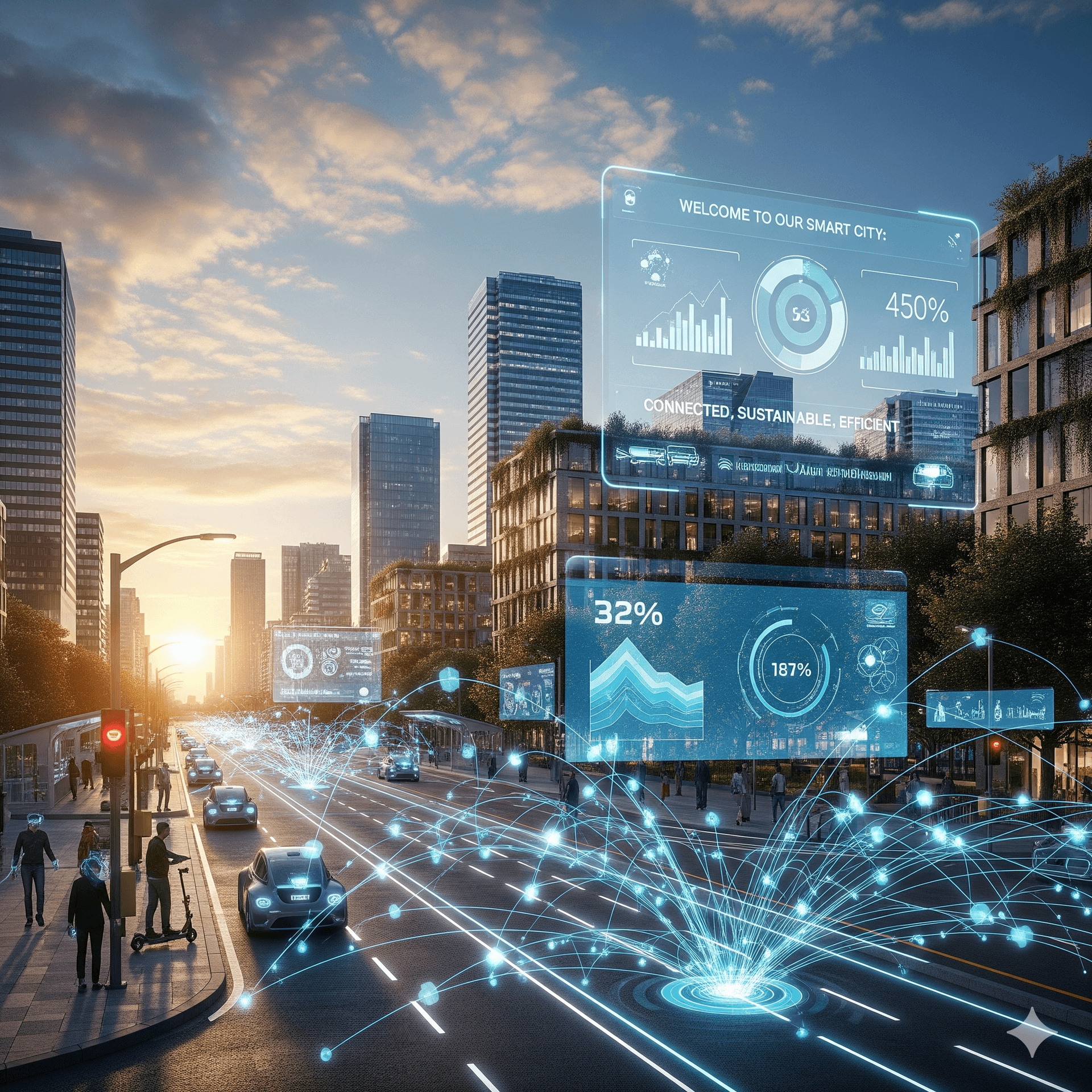
In a smart city, IoT devices, sensors, and real-time data analytics are widely used to monitor and manage infrastructure. These technologies enable city administrators to make proactive decisions, reduce congestion, lower energy consumption, and improve overall urban livability. Residents experience safer, cleaner, and more convenient urban environments due to these intelligent systems (IBM, 2023).
AI & Cloud Computing
The integration of AI, big data, and cloud computing enables cities to be adaptive, resilient, and responsive to emerging challenges. Advanced communication networks and integrated systems allow for real-time monitoring of traffic, utilities, and public safety, providing adaptive solutions to urban challenges.
Citizen Engagement & Benefits
Digital Participation
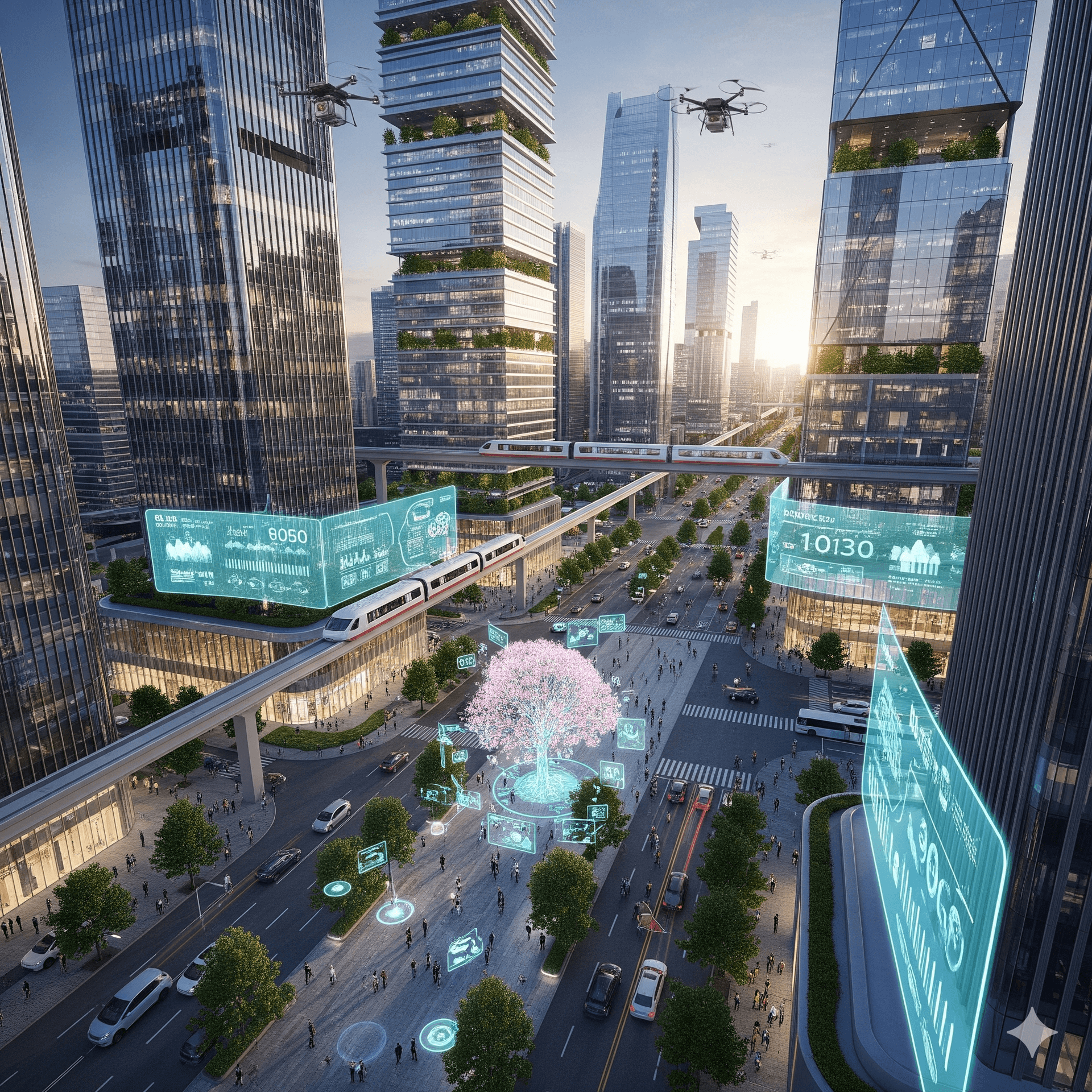
Smart cities emphasize citizen engagement and economic innovation. Digital platforms allow residents to report issues, participate in urban planning, and interact with local authorities, while businesses benefit from better connectivity, logistics efficiency, and opportunities for technological development.
Sustainability & Growth
The benefits of smart cities extend to environmental sustainability and social welfare. By improving energy efficiency, monitoring pollution, and optimizing public services such as healthcare, transportation, and administrative processes, smart cities reduce their ecological footprint while enhancing citizens' daily lives. Furthermore, they encourage public-private collaboration and attract innovative businesses, contributing to economic growth and technological advancement (Plant Moran, 2018).
The Ultimate Vision
Ultimately, smart cities create a connected urban ecosystem where infrastructure, residents, and services interact intelligently. By fostering sustainable growth, efficiency, and inclusivity, smart cities aim to improve both the livability and resilience of urban environments (Cisco, 2023).
Video About Smart City
References & Further Reading
European Commission. Smart Cities: City Initiatives. 2023
View Details →IBM. What is a Smart City? 2023.
View Details →TechTarget. Smart City Definition. 2023
View Details →Plant Moran. Smart Cities: The Future of Urban Development. 2018
View Details →Cisco. Smart Cities: Improving Lives Through Technology. 2023
View Details →